Tempted by a surprisingly low price but worried about the quality you'll receive? Choosing the wrong supplier can damage your project and your reputation. I will show you the critical differences.
Yes, the difference between quartz manufacturers is huge. Premier factories prioritize high quartz content (>90%), advanced technology, and rigorous quality control. Cheaper suppliers often slash costs by reducing quartz, leading to poor durability, processing issues, and expensive failures down the line.
As a procurement manager, you know that price is a key factor in every project. But I have learned over more than a decade in this business that the initial price tag only tells part of the story. The real value is in the long-term performance and the reliability of your supply partner. Some differences are invisible at first glance, but they can make or break your project in the long run. Let's look at what truly separates a good partner from a risky one.
Does brand matter for quartz countertops?
You see countless different brands and unknown factories. Does paying more for a known name really get you a better product? I will show you what a brand truly represents.
Yes, brand matters because it represents consistency and trust. An established brand has a reputation to uphold, which means stricter quality control, reliable service, and predictable performance. It is less about the logo and more about the assurance of quality you get with every slab.
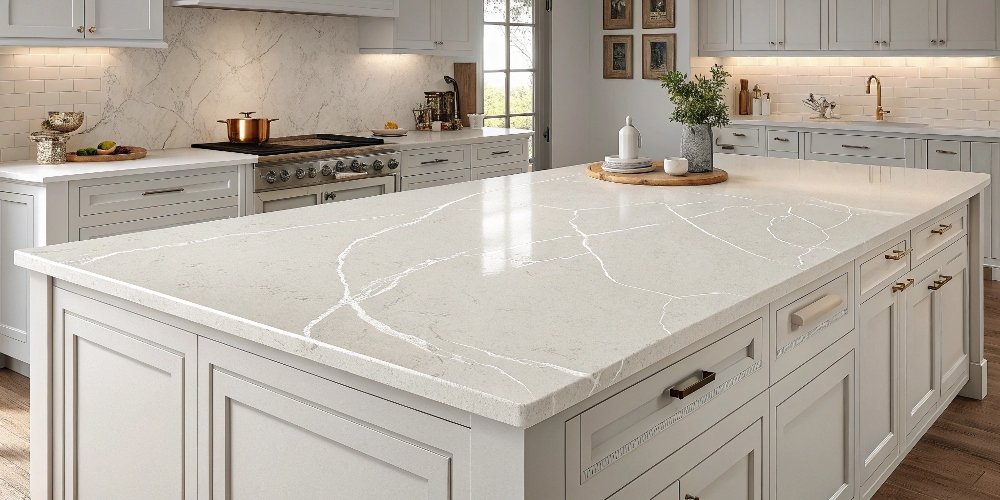
A brand is not just about marketing; it is a promise. When you work with a trusted manufacturer, you are buying peace of mind. This is critical when you are responsible for large-scale commercial and residential projects that require consistent results.
Beyond the Logo: A Promise of Consistency
You need to know the technical specifications on the data sheet will match the physical product that arrives at your warehouse, every single time. This consistency eliminates guesswork and unexpected issues during fabrication, saving you time and money. There are no surprise variations in color, thickness, or performance from batch to batch. With a good brand, you are buying predictability, which is essential for managing concurrent projects.
The Value of After-Sales Support
In my experience, a brand's value is proven not when things go right, but when you need support. They have established processes for customer service and stand behind their product with a clear warranty. A rock-bottom price from an unknown factory simply cannot offer this level of security. Choosing a partner with a good reputation is an investment in your own project's success.
Are all quartz countertops the same?
All quartz slabs can look similar when you see them online or in small samples. It is easy to assume they are all made the same way. I will reveal the hidden differences.
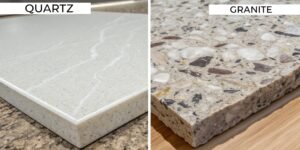
No, they are definitely not the same. The most critical difference is the percentage of natural quartz sand. High-quality slabs contain over 90% quartz, giving them hardness and durability. Cheaper versions use less quartz and more fillers, making them brittle and prone to staining.
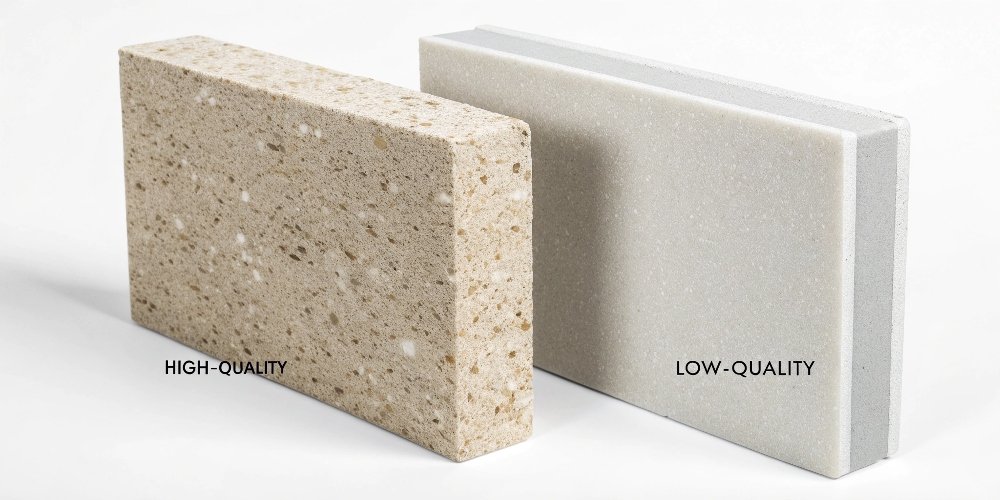
The "90% quartz" rule is the industry standard for a good reason. If the content falls below this, the material's properties change completely. This is the main secret behind those unbelievably cheap prices you might see.
The Critical Role of Quartz Content
Suppliers cut costs by reducing the most expensive raw material: the quartz sand itself. This directly impacts the product you deliver to your clients. A lower quartz content means a higher percentage of resin and fillers, which compromises the slab's structural integrity. This is not just a small detail; it is the foundation of the product's quality.
Practical Impact on Your Projects
This change isn't just a number on a spec sheet; it has real-world consequences for your team and your clients. Here is a simple breakdown:
| Feature | High-Quality Quartz (>90%) | Low-Cost Imitation (<90%) |
|---|---|---|
| Hardness | Very hard, highly scratch-resistant. | Softer, scratches more easily. |
| Fabrication | Cuts cleanly with less risk of chipping. | Brittle, prone to cracking during cutting. |
| Porosity | Non-porous, excellent stain resistance. | More porous, can absorb liquids and stain. |
| Long-Term Cost | Low maintenance, high durability. | High risk of failure, complaints, and replacement cost. |
Which company makes the best quartz?
Are you searching for the single "best" quartz brand in the world? This endless search can be confusing and might lead you down the wrong path. Let me help you ask a better question.
The "best" company is not a single name but the right partner for your business. The best manufacturer for you provides consistent quality, transparent communication, reliable logistics, and a focus on your long-term success, not just a one-time deal.

I have seen many factories that can produce one beautiful sample. But can they produce 500 slabs of that exact same quality? And will they deliver on schedule? These are the questions that define the "best" company.
From Product to Partnership
The ideal partner becomes an extension of your own team. They understand your business needs, your project timelines, and your quality standards. They work with you to meet them. Look for a manufacturer that values a long-term relationship over a quick sale. This is far more important than finding the absolute lowest price. This partnership approach helps you reduce lead times and manage your inventory more effectively.
What Defines a Great Partner?
A great partner invests in technology and quality systems to ensure their product is stable and reliable for years. They communicate proactively, especially when there are potential challenges with logistics or production, which I know is a major concern. They offer solutions, not excuses. This is the kind of partner that helps your business grow and protects your reputation.
Is there a difference in the quality of quartz?
Are you doubting if a very big price drop really means a big quality drop? The temptation of those huge savings can feel too strong to ignore. Let my client's experience be your guide.
Yes, the quality difference is immense, and it is directly linked to the raw materials. Lower quality quartz often fails over time, leading to customer complaints and huge replacement costs that destroy any savings you made upfront. True quality means long-term durability.
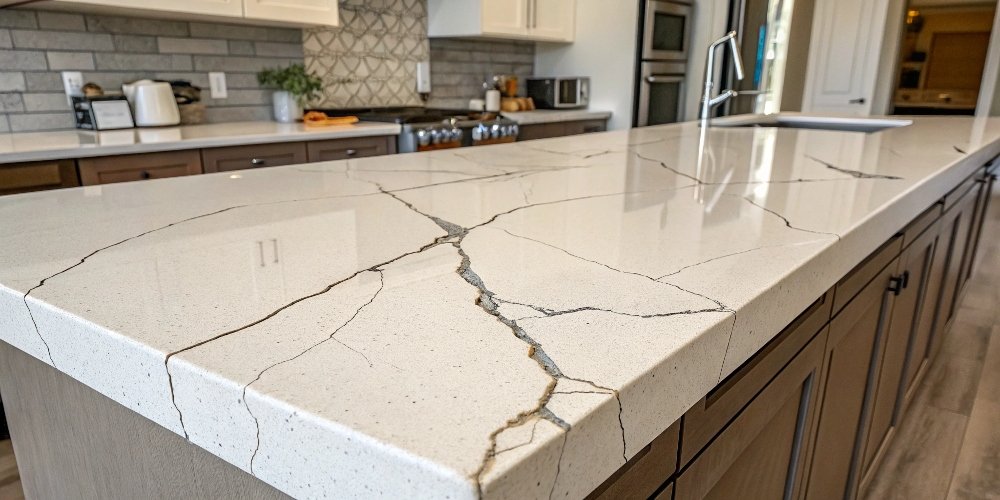
I'll share a personal story that perfectly illustrates this point. I worked with a long-term client who, like you, manages multiple suppliers and is always seeking efficiency.
The Lure of the Half-Price Offer
One day, he called me, and he was very angry. He had found a "manufacturer" in China selling quartz for half my price and accused me of overcharging him for years. I was confused because I know the industry costs and always gave him a competitive price. I tried to explain, but he was too upset and cut off all contact. In that time, I bought a sample from that factory and confirmed my fears: the quartz content was extremely low.
The True Cost Revealed Over Time
A year later, he finally contacted me. He placed a new OEM order and told me the whole story. For the first six months, everything seemed fine. Then, the complaints started pouring in. The slabs were cracking and staining. The total cost to his company in labor, materials, and reputation was enormous. He told me, "I should have trusted you." This is why choosing a manufacturer based on more than just price is critical.
Conclusion
Choosing a quartz manufacturer is not just about the initial price. It is about finding a stable, quality-focused partner who will ensure your long-term business success and protect your reputation.