Are you worried about navigating the complex web of industry regulations? This uncertainty can be stressful, but a clear compliance strategy is the key to ensuring every project succeeds.
To guarantee compliance, you must proactively track international standards, source materials from certified suppliers, perform regular factory audits, and use third-party testing. Complete, accurate documentation for every shipment is the final, crucial step.

A few years ago, a large order from a European client really drove this point home for me. They had very strict requirements for environmental and chemical safety standards. This was a wake-up call. It pushed us to build a robust system for compliance that is now a core part of our business. We stay updated on regulations in all major markets, like REACH in Europe and ANSI in the U.S. We also invest in our own factory, making sure we have certifications like ISO 9001 for quality and ISO 14001 for environmental management. This isn't just about passing inspections; it's about giving you, our partner, complete peace of mind. Let’s look at some specific details that are important for your projects.
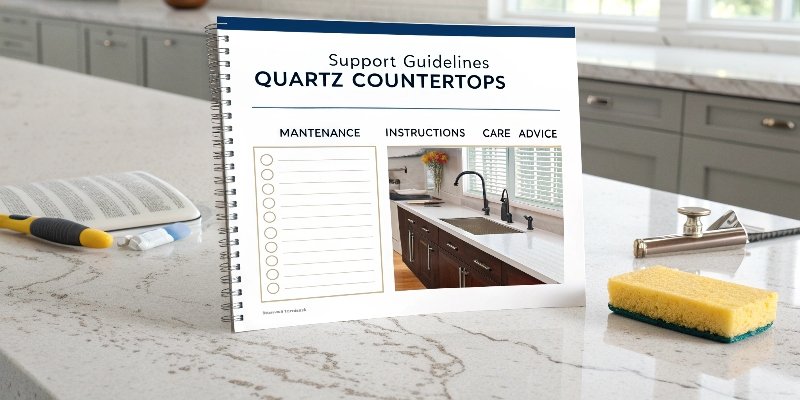
What are the support guidelines for quartz countertops?
You've installed a beautiful new quartz countertop, only to see a crack appear. The cause? Improper support voided the warranty. Following clear guidelines is essential to prevent this.
For 2cm thick slabs, you need support every 24 inches. For 3cm slabs, this extends to every 36 inches. Always ensure cabinets are perfectly level and provide continuous support for seams and sink cutouts.
When I supply quartz slabs, my job doesn't end when the container arrives. I want your project to be a success, and that means ensuring the final installation is flawless. The most common issue I've seen over the years is damage from inadequate support. It's a costly mistake that is very easy to avoid. Beyond the basic spacing, another key rule involves overhangs, like those for a breakfast bar. A quartz overhang should not extend more than one-third of the total countertop depth, or about 12-14 inches, without extra support like corbels or steel brackets. This prevents the slab from bowing or cracking under its own weight. Cutouts for sinks and cooktops are also weak points. The cabinet structure must fully support the countertop all the way around the cutout. I always advise fabricators to use a sub-frame to reinforce these areas.
Key Support Requirements
To make it simple, here are the core support rules to follow. Sticking to them will protect the material's integrity and ensure it lasts for decades.
| Thickness | Maximum Span | Overhang Limit (Unsupported) | Seam Support |
|---|---|---|---|
| 2cm (3/4") | 24 inches | 8 inches | Required |
| 3cm (1 1/4") | 36 inches | 14 inches | Required |
What is the strength of quartz countertops?
Choosing a countertop can be tough. You worry about daily life causing scratches, chips, or stains. With engineered quartz, its incredible strength gives you lasting peace of mind.
Engineered quartz is extremely hard, scoring a 7 on the Mohs scale of hardness. It is highly resistant to scratches, chips, and impact. Its non-porous surface also means it resists stains much better than granite or marble.
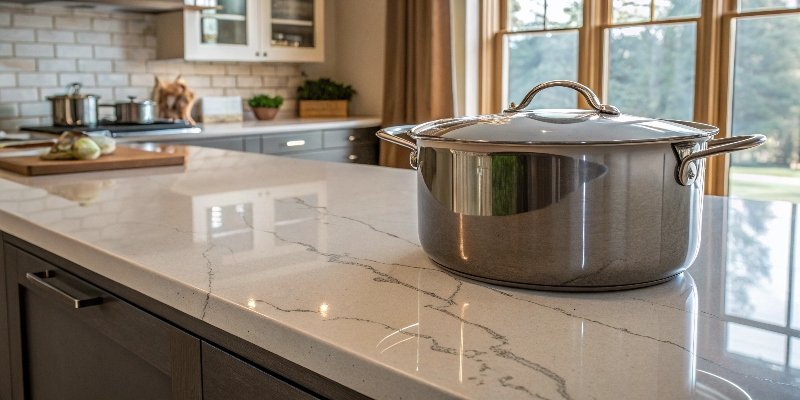
I often get asked just how tough our quartz slabs are. It's one thing to read the numbers, but it's another to see it in person. I remember a client who visited our showroom was very skeptical. He took a sample and tried to scratch it with his car key. Not a mark. That’s the power of combining natural quartz, one of earth's hardest minerals, with high-quality resins. The manufacturing process, which involves vibration, vacuum, and high pressure, creates a very dense and compact slab. This density is the secret to its durability. It’s what makes quartz so resistant to the things that would damage other surfaces. Spills like wine, coffee, or oil don’t penetrate the surface, so they can’t cause permanent stains. This strength ensures that the countertop you install will continue to look great for many years, even in a busy commercial or residential kitchen.
Understanding Quartz Hardness
The Mohs scale helps put the strength of quartz into perspective. It shows how well a material resists scratching. With a rating of 7, quartz stands up well against common kitchen items and outperforms many well-known natural stones.
| Material | Mohs Hardness Scale (1-10) | Practical Implication |
|---|---|---|
| Diamond | 10 | The hardest known mineral. |
| Quartz | 7 | Resists scratches from steel knives, glass, and granite. |
| Granite | 6-7 | Strong, but can be scratched by some hard materials. |
| Marble | 3-4 | Softer stone, prone to scratches and etching. |
| Fingernail | 2.5 | Very soft, for reference. |
What is the silica content of quartz?
You may hear concerns about silica in countertops. This can create confusion about product safety and regulations. Understanding the basic composition of engineered quartz makes it simple and clear.
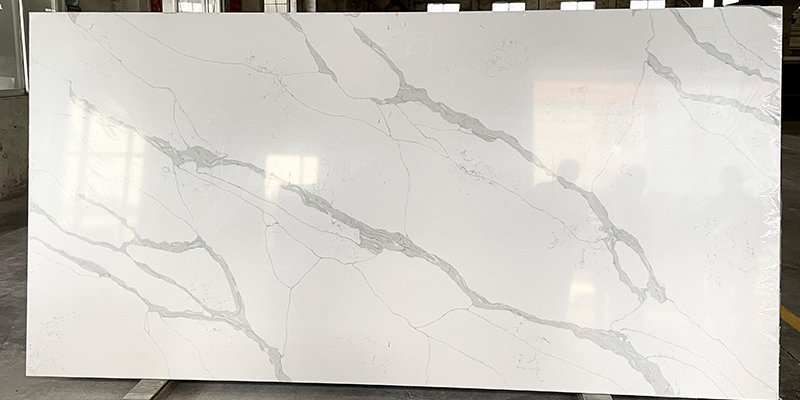
Engineered quartz slabs are made of more than 90% natural quartz crystals, which are a form of silica. The last 10% is a mix of resins, polymers, and pigments that bind the slab together.
Let's be very clear about silica. The finished, installed countertop in a home or business is perfectly safe. The concern about silica is related to the dust that is created when the slab is cut, ground, or polished. This is known as respirable crystalline silica. As a supplier, I take this very seriously, both in my own factory and for the fabricators who handle our products. In our facility, we have strict dust control systems in place, which is a key part of our ISO 14001 certification for environmental management. We use wet-cutting methods that suppress dust at the source and have powerful ventilation systems to protect our workers. I make it a point to walk through the factory myself every week to ensure these safety protocols are followed without fail. We also provide Material Safety Data Sheets (MSDS) with every shipment, which gives fabricators clear guidance on how to handle the material safely.
Composition and Safety
The high silica content is what gives quartz its signature durability and beauty. The key is to manage the risks during fabrication, not to fear the final product.
| Component | Percentage | Role in the Slab |
|---|---|---|
| Natural Quartz | 90-94% | Provides hardness, color, and pattern. (This is silica) |
| Resins & Polymers | 6-10% | Binds the quartz crystals together, creates a non-porous surface. |
| Pigments | <1% | Adds color to the slab. |
Does Quartzite have silica dust?
It's easy to confuse engineered quartz with natural quartzite. This confusion can cause serious mistakes in workplace safety and material handling. Knowing the difference is critical for a safe project.
Yes, absolutely. Quartzite is a natural metamorphic rock that is almost pure silica. When it is cut, ground, or drilled, it produces fine silica dust, which is hazardous if inhaled without proper safety equipment.
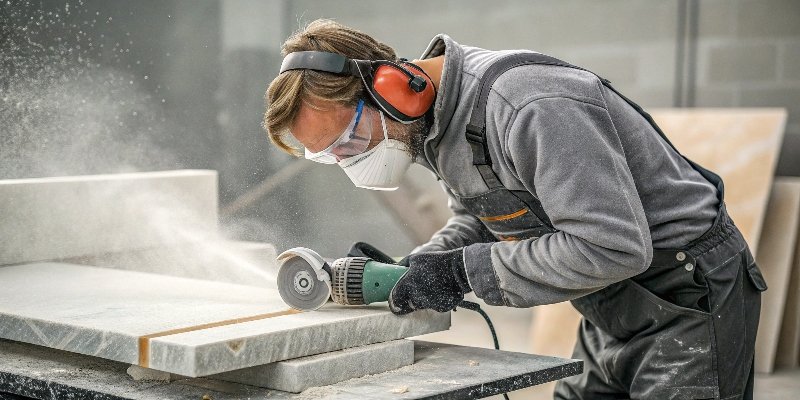
I want to be very clear on this point because the safety of the people who work with these materials is paramount. While I specialize in engineered quartz, I deal with clients who work with all types of stone. Quartzite is a beautiful natural stone, but it is one of the richest sources of silica you can find, often over 95%. The danger of respirable crystalline silica is the same whether it comes from engineered quartz or natural quartzite. The safety procedures for fabrication are identical: wet cutting, proper ventilation, and personal protective equipment (PPE) like respirators are not optional. As a supplier, I feel a responsibility to promote safety across the industry. This is why we are so transparent with our documentation. A missing document can delay a shipment, but missing safety information can have much worse consequences. It is a topic I always discuss with new clients.
Quartz vs. Quartzite: A Safety Comparison
While their origins are different, engineered quartz and natural quartzite demand the same high level of respect and safety during fabrication due to their shared primary component: silica.
| Feature | Engineered Quartz | Natural Quartzite |
|---|---|---|
| Origin | Man-made composite, ~90% quartz crystals plus resin. | 100% natural, a metamorphic rock. |
| Silica Content | High (typically 90%+) | Very High (often 95%+) |
| Fabrication Risk | Creates respirable silica dust when cut or ground. | Creates respirable silica dust when cut or ground. |
| Safety Needs | Wet cutting, ventilation, and PPE are essential. | Wet cutting, ventilation, and PPE are essential. |
Conclusion
Ultimately, ensuring compliance and safety is about having the right knowledge and systems. It means understanding product details, following support guidelines, and prioritizing safety for silica-based materials every time.